
Our Programs / Languages & Technology
1. Communicate
Languages & Technology
Learn to communicate with people, and with technology.
Confidence in human languages, plus real digital fluency.
Afternoon programme 14 sessions, join any week 2 hours a session Groups of eight CHF 45 trial refunded if it isn't right
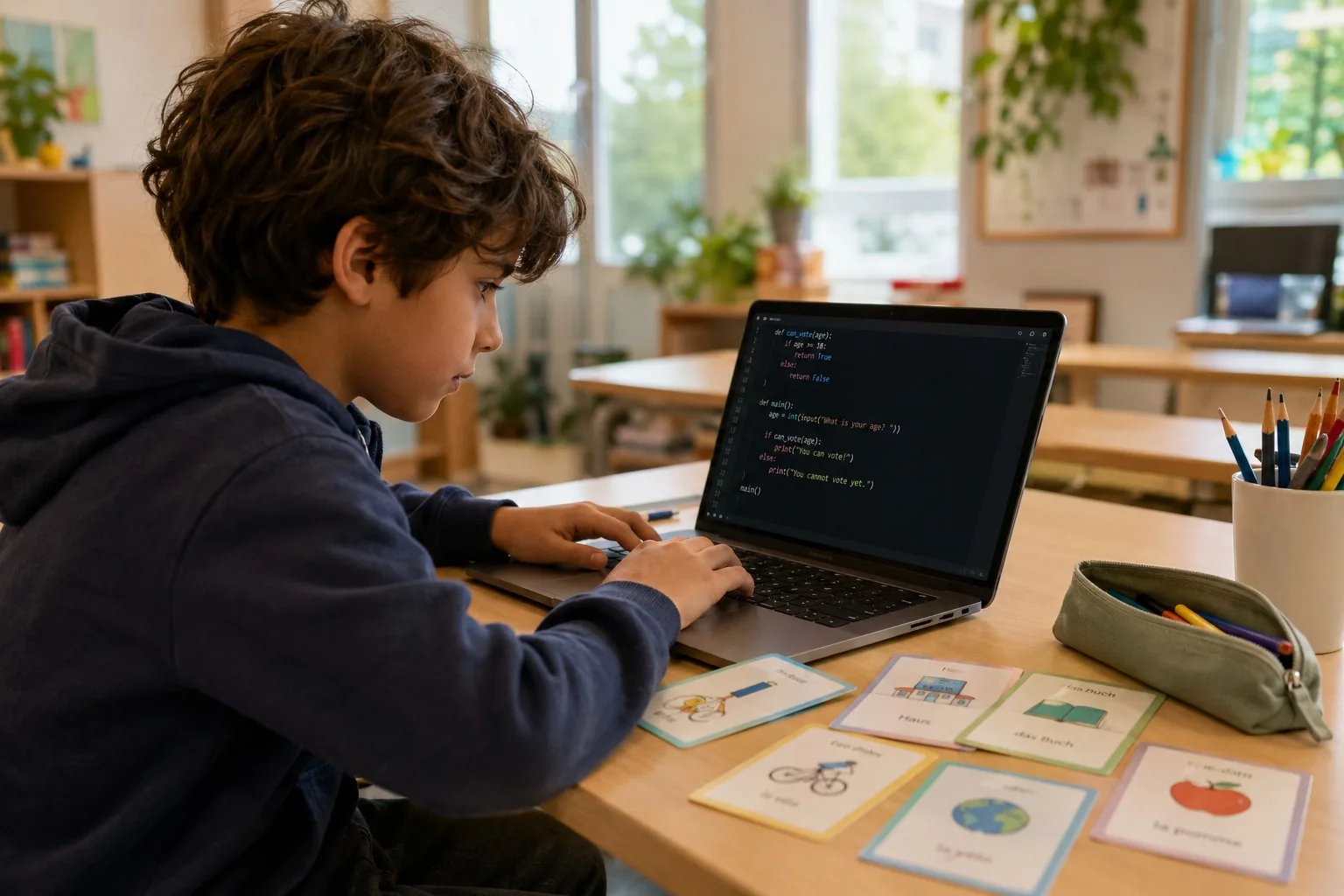
What the 14 sessions cover
One fee, one session a week, fourteen sessions from the week your child joins. Your child works through all six below, these are not six courses to choose between.
Eight places per group. Fees, the session calendar and the full curriculum sit in the brochure.
- What the fee covers
- 14 sessions of two hours, one session a week, in a group of no more than eight. If the trial session isn't right for your child, we refund the CHF 45.
- If your child misses one
- Tell us before the afternoon starts and the session is made up in another group the same week, space permitting. Unannounced absences are not credited.
- Start
- New entry every week — join anytime. The 14 sessions run weekly from your child's first session, excluding Zürich school holidays. Full session calendar sent on enrolment.
What your child learns
The skills every Languages & Technology group works on, whichever programme fills the afternoon.
- Speaking confidence
- Reading comprehension
- Listening skills
- Writing skills
- Public speaking
- Cross-cultural communication
Inside the Languages & Technology programme
- English
- Speaking and writing for a real audience: presentations, short stories, debates. Children are grouped by ability rather than school year, so a confident seven-year-old and a quieter ten-year-old are both stretched.
- Deutsch
- Reading, writing and grammar for children in the German-language school system, and Hochdeutsch confidence for children who arrived recently.
- Python Programming
- From a first variable to a working program. Children build small games and tools they can show at home, and learn to read an error message without panic. Starts at nine, because it leans on written fluency.
- Digital Literacy
- How search, sources, AI tools, passwords and privacy actually work. Children practise judging what they read and using AI tools openly, with an adult in the room asking why.
- STEM: Maths, Physics & Code
- Taught by Dr. Ilya, a geophysicist and programmer. Children take a real question, how a ball moves through the air, why planets orbit, how an earthquake could be modelled, and work the scientist's loop: question, model, code, experiment, analyse, visualise, explain. They finish with a working model and the ability to say what it means.
Learn STEM from a working scientist
From curiosity to discovery
Dr. Ilya is a geophysicist and programmer. In his sessions children do not learn coding for its own sake, they use maths, physics and code together to answer a question they actually care about.
A child leaves with a working model and an explanation they can give out loud.
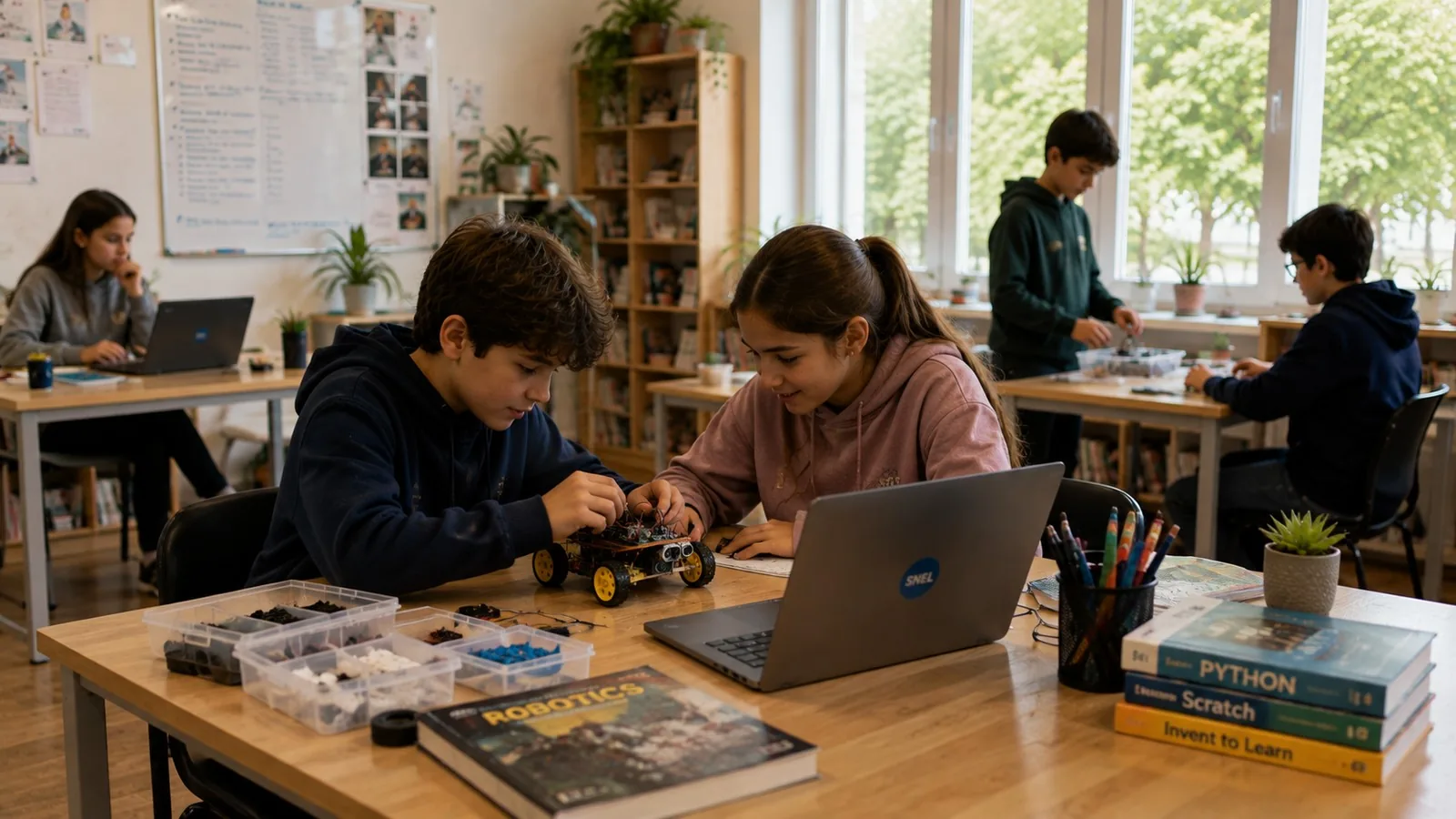
How a scientist actually works, and how the afternoon runs
Questions a child might take on
Real science
Questions taken from the natural world, not from a worksheet.
Real coding
Programming used to investigate an idea, not only to make games.
Real mathematics
Where a maths concept becomes useful the moment it is applied.
Real-world thinking
Classroom knowledge tied to something a child can see happening.
Every 14 sessions end with a Young Scientist Showcase
Parents are invited in. Each child presents the question they investigated and the model they built to answer it — and takes the whole thing home.
What your child walks out with
- The question they chose to investigate
- Their mathematical model of it
- The Python program they wrote
- Their graphs and visualisations
- What they discovered
- A short presentation, given aloud
Fees, calendar and everything else
Start with a single session for CHF 45. The full breakdown of the 14 sessions sits in the detailed brochure, together with the session calendar, instructor credentials and what your child builds at each age.
Start here
CHF 45
One trial session of two hours in a real group of eight, credited in full against your first pathway fee if you enrol.
If the trial session isn't right for your child, we refund the CHF 45.
The detailed brochure
Everything a decision needs, in one PDF, opened here straight away and sent to your inbox.
- ·The full price breakdown: pathways, bundles, bootcamps, Gymnasium Prep and tutoring
- ·The session calendar and Zürich school holidays
- ·Programme-by-programme detail across the three pathways
- ·Instructor bios and credentials
- ·What your child builds, by age
- ·How we compare with other Zürich providers
- ·Sibling and referral discount detail
We use your address to send the brochure and occasional news about intakes. Unsubscribe in one click, and we never pass it on.
Your brochure is ready
Also sent to . Every fee, bundle and discount is in the PDF.
Open the brochure (PDF)What is included
- Maximum eight children per teacher
- All laptops, software and materials
- A finished project your child keeps
- A written progress note after the 14th session
Discounts
- Sibling: 15% off the second child, enrolled at the same time
- Referral: CHF 50 credit to both families
- Two blocks of 14 sessions booked together: 10%
- Trial fee credited in full on enrolment
Payment
- TWINT and card
- Pathway fees in two instalments: half at the start, half at session 7
- Missed session made up in another group the same week, if announced in advance
- If the trial session isn't right for your child, we refund the CHF 45.
What 14 sessions look like
Fourteen sessions of two hours with the same teacher and the same eight children, ending in something your child can show you.
Sessions 1 to 2
Placement
Where your child actually is, in language and on a keyboard. Groups are set from this, not from age.
Sessions 3 to 12
Weekly work
Language work and screen work in the same afternoon, each session ending with something spoken aloud or run on a machine.
Sessions 13 to 16
Build a project
A presentation, a story or a small program, prepared in the language your child is learning.
Sessions 17 to 18
Show and note
Children present to the group and to you. You receive a written progress note after the 14th session.
Children develop:
- Communication
- Language Confidence
- Digital Fluency
- Computational Thinking
- Problem Solving
Sponsors & partnerships

The Swiss NewEra approach
Digital well-being & human development
This runs through all four pathways, rather than being another subject you have to choose. There is nothing extra to add to the basket and nothing extra to pay.
Every programme integrates:
Come and see an afternoon
Ninety minutes at the back of a real session. CHF 45, credited in full if your child enrols.
Find us and get in touch