Choose a course that fits your child’s stage, interests and goals.
September 2026–July 2027
Growing up with increasingly capable AI
Children need more than familiarity with the latest tool. They need knowledge to check an answer, language to explain a view, creativity to explore alternatives and judgment to act responsibly. More capable AI makes these foundations increasingly valuable. No one can promise exactly how future systems or jobs will develop; our aim is to help learners understand, question, create and keep learning.
German · Grades 3–5
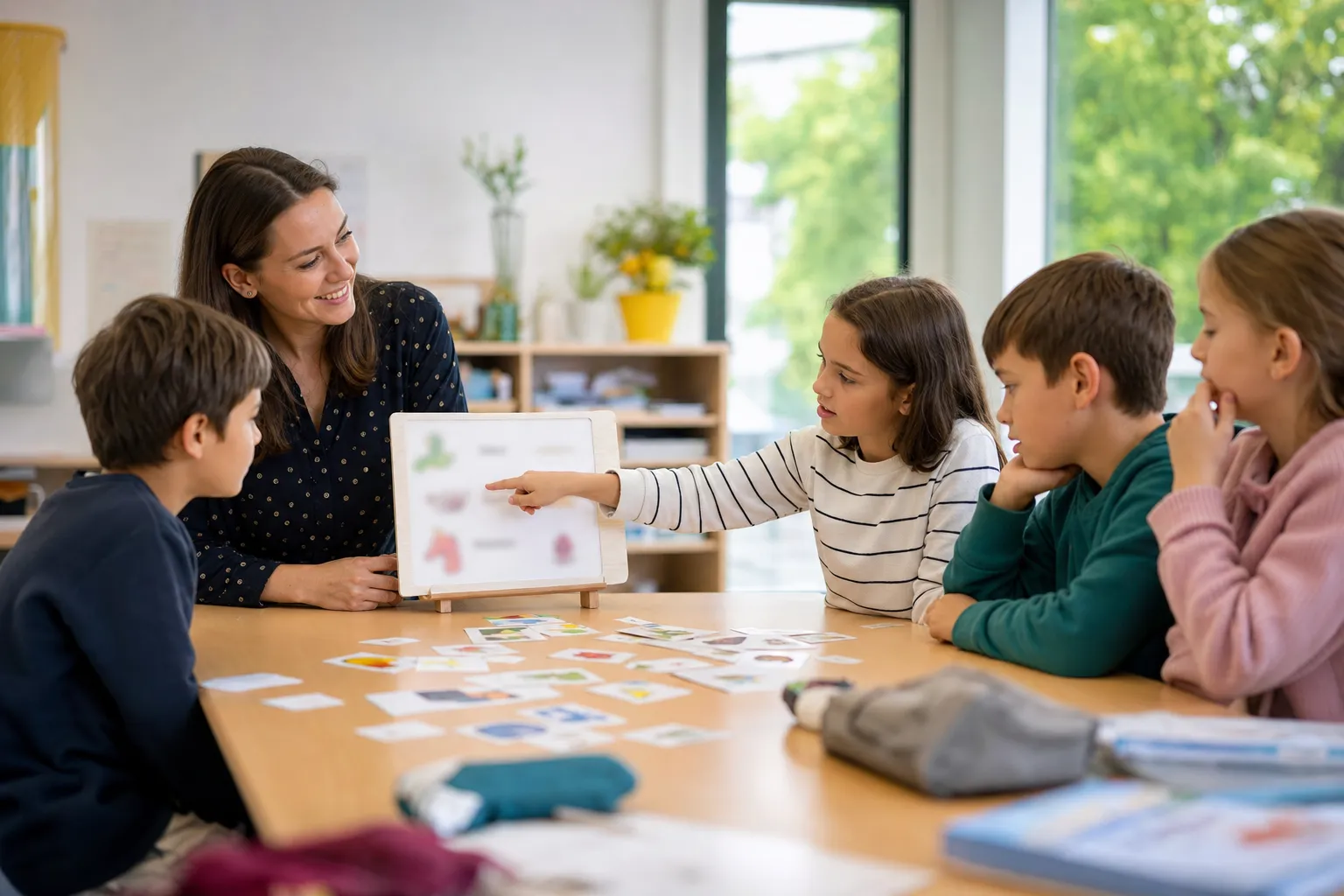
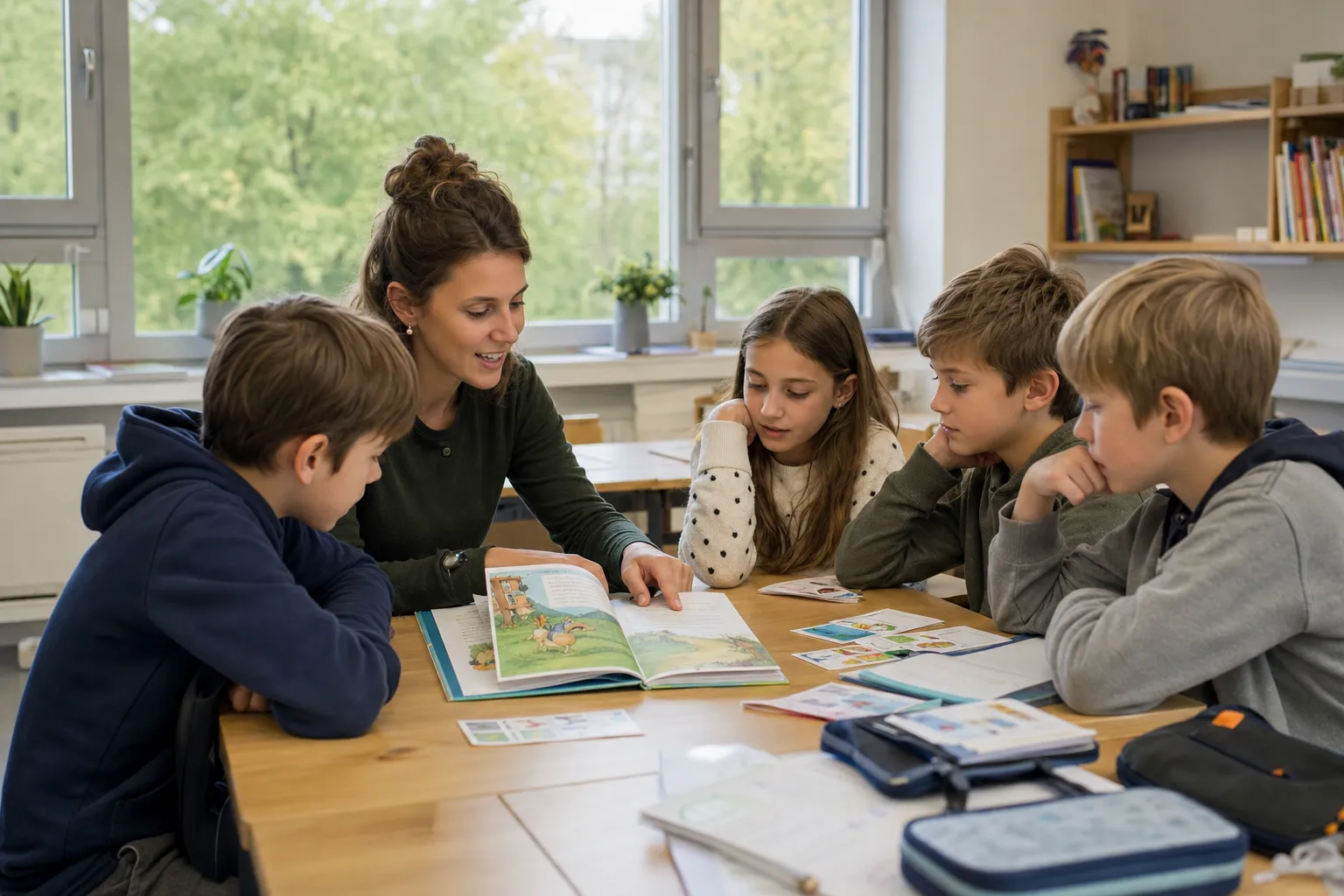
Understand texts, strengthen vocabulary, spelling and grammar, and express ideas clearly in speech and writing. Practice supports the school week.
Grades 3–5 Monday · 16:45–18:00 Up to 10 learners · 75 minutes
What this subject means
German is a foundation for understanding school texts, expressing precise ideas and participating confidently in everyday life.
Why it matters as AI advances
AI can suggest wording, but learners still need vocabulary, comprehension and language awareness to recognise errors and make a text their own.
A learning path that builds independence
Read and explain a short text → build accurate sentences → plan and revise an independent piece of writing.
What your child will practise
Read and discuss short texts; practise spelling and sentence structure; plan and revise a piece of writing.
Progress you can recognise
Clearer explanations, more accurate language and a useful next step for schoolwork.
Learning materials
Reading passages, vocabulary cards, grammar and spelling exercises, writing paper and revision checklists.
Create, code and think critically · STEM for ages 7–17
Hands-on science, programming and AI projects that help young people solve problems, evaluate information and use connected technology safely, including the basics of cybersecurity.
Ages 8–12 and 13–17 · two groups Tuesday · 16:50–18:50 Up to 10 learners · 120 minutes Children can start programming from age 7 and join the younger group.
What this subject means
STEM connects science, technology, engineering and mathematics. Programming turns ideas into instructions; cybersecurity protects people, accounts and information.
Why it matters as AI advances
Understanding how systems work helps learners test AI outputs, recognise manipulation and decide what information to trust or share. The goal is informed use, rather than dependence on a tool.
A learning path that builds independence
Explore patterns and instructions → code and debug a guided project → build, test and explain a useful solution with a privacy and safety review.
What your child will practise
Plan, code and debug a project; verify AI claims; identify phishing; review permissions and smart-device data flows.
Progress you can recognise
A working project and the ability to explain a design choice, a safety risk and a way to reduce it.
Learning materials
Laptops, age-appropriate coding tools, notebooks and project equipment suited to the task; fictional data for cybersecurity exercises.
Structured Maths and German practice, exam technique and targeted feedback for grades 5–6. Admissions outcomes cannot be guaranteed.
Grades 5–6 Wednesday · 16:00–18:00 Up to 5 learners · 120 minutes
What this subject means
Gymi preparation strengthens German comprehension, writing and mathematical reasoning alongside familiarity with the entrance-exam format.
Why it matters as AI advances
A convincing AI answer is not evidence of understanding. Working through reasoning, checking assumptions and explaining a solution support both demanding study and responsible use of digital assistance.
Individual Gymi preparation is tailored academic support for a grade 6 learner’s starting point, pace and preparation needs.
Why it matters as AI advances
Independent reasoning matters even when assistance is readily available. A teacher can explore how the learner reached an answer and help address the misunderstanding behind a mistake.
A learning path that builds independence
Review strengths and gaps → agree priorities → practise with individual feedback → revisit difficulties and build an independent study routine.
What your child will practise
Review the learner’s starting point; revisit difficult German and Maths concepts; practise exam strategies at an individual pace.
Progress you can recognise
An individual learning plan and specific feedback to guide the next stage of preparation.
Learning materials
Individual diagnostic tasks, targeted German and Maths work, practice papers and a personal study plan.
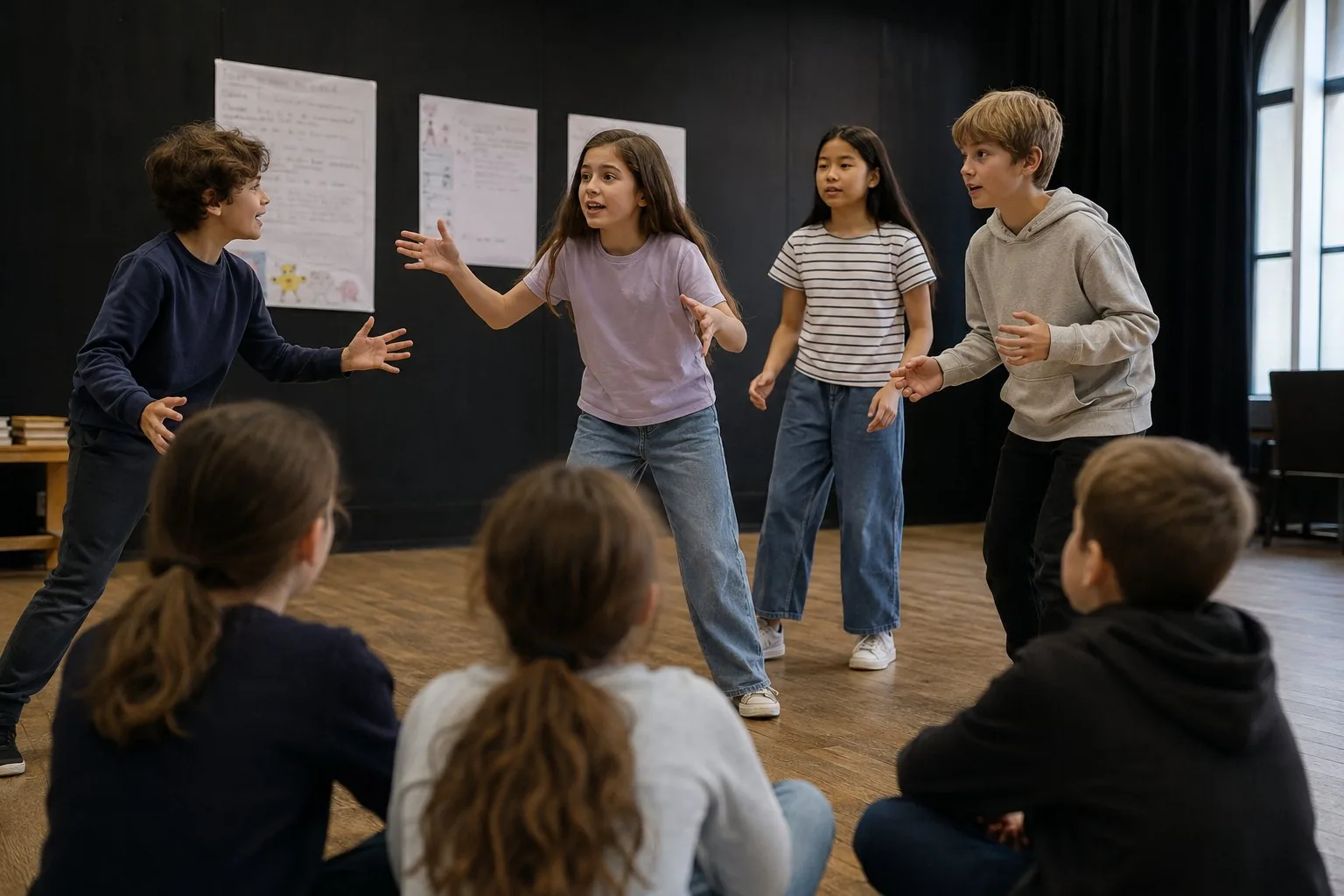
Voice, rhythm, movement, character, improvisation and collaborative rehearsal develop confidence and expression.
Ages 6–17 Thursday · 16:45–18:30 Up to 10 learners · 105 minutes
What this subject means
Theater, music and performance develop the ability to listen, interpret, express an idea and create with other people.
Why it matters as AI advances
AI can generate images, music or scripts. Choosing a meaningful interpretation, responding to a live partner and taking responsibility for a shared performance require human attention and participation.
A learning path that builds independence
Explore voice, rhythm and movement → rehearse a short scene or sequence → shape and share a collaborative performance, then reflect on feedback.
What your child will practise
Explore voice, rhythm and movement; create a scene or musical sequence; rehearse and respond to feedback.
Progress you can recognise
A shared performance or creative piece, with stronger expression and collaboration.
Learning materials
Scripts, songs, rhythm and movement exercises, rehearsal space and simple performance materials suited to the activity.
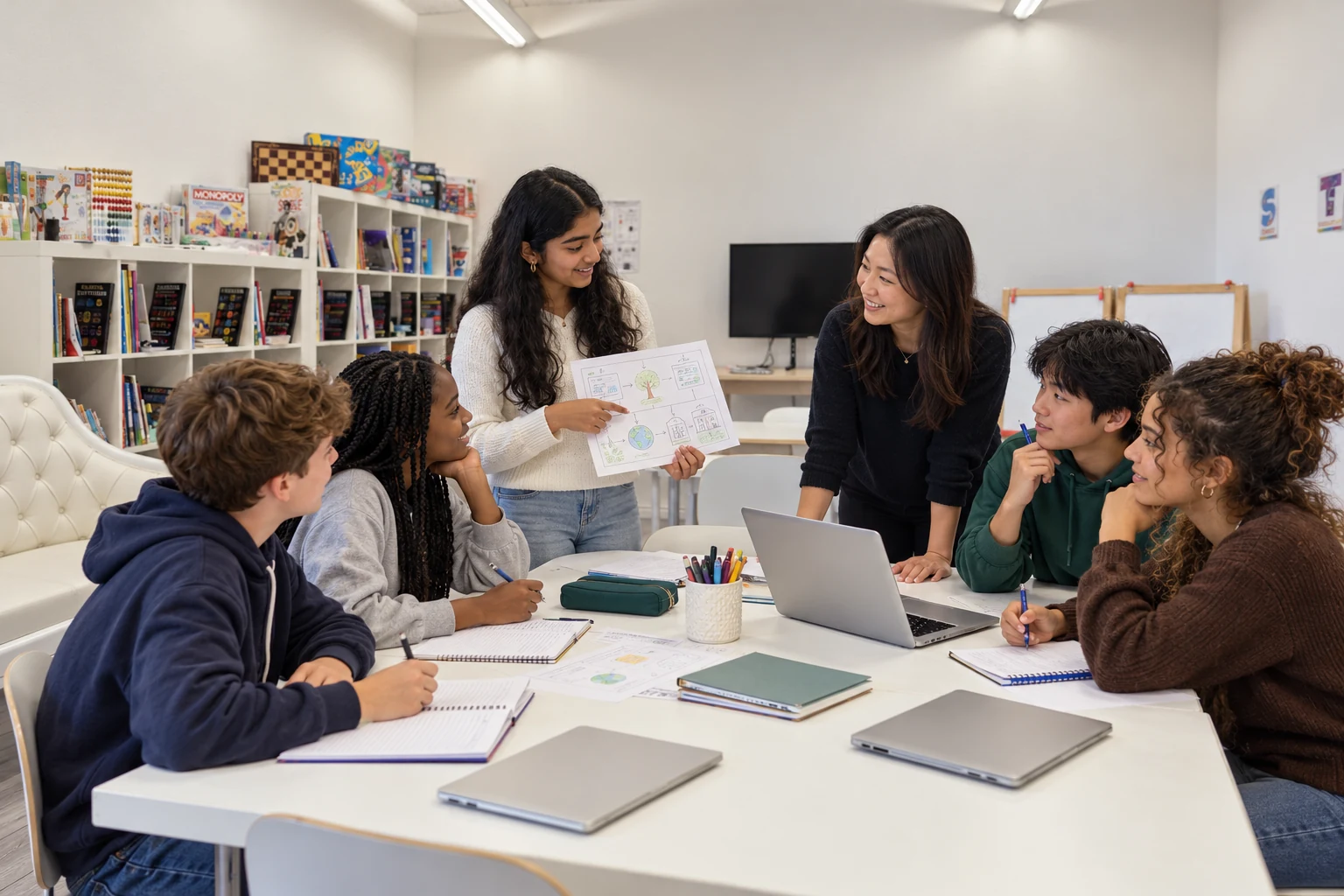
Financial literacy, critical thinking, ethical decisions, teamwork and entrepreneurship. Develop a project, test assumptions and explain its value.
Ages 12–17 Friday · 17:00–19:00 Up to 10 learners · 120 minutes Younger advanced learners by assessment.
What this subject means
Leadership and life skills mean making thoughtful choices, understanding resources, cooperating and taking responsibility for an idea and its consequences.
Why it matters as AI advances
As AI supports more decisions, learners need to question recommendations, consider fairness and incentives, communicate uncertainty and decide when human responsibility must remain explicit.
A learning path that builds independence
Understand a need and a budget → compare options and team roles → develop a small proposal → present it, test assumptions and explain trade-offs.
What your child will practise
Work with a budget, discuss an ethical decision, negotiate a team role and develop a small project.
Progress you can recognise
A project proposal or presentation that explains choices, trade-offs and lessons learned.
Learning materials
Notebooks, project briefs, budgeting worksheets, presentation materials and digital tools where they serve the task.
Conversation, listening, reading and writing through stories and purposeful activities. Tasks are matched to age and proficiency.
Children and teenagers Saturday · 09:00–11:00 Up to 10 learners · 120 minutes Placement by level.
What this subject means
Learning French builds the ability to understand others, exchange ideas and participate in another linguistic and cultural setting.
Why it matters as AI advances
Translation tools are useful, but direct language knowledge helps learners notice tone, check meaning and build relationships without relying entirely on automated mediation.
A learning path that builds independence
Listen and use useful phrases → read and discuss stories → write, speak and revise increasingly independent work appropriate to level.
What your child will practise
Listen and speak in meaningful situations; explore stories and vocabulary; practise reading and writing at an appropriate level.
Progress you can recognise
Greater confidence using French and a clearer next step in language learning.
Learning materials
Books, stories, vocabulary cards, conversation prompts and level-appropriate reading and writing tasks.
Not sure about the right level? Request a placement conversation before choosing a course.
Teaching is adapted to the learner’s starting point. Regular-course feedback includes a midpoint review and a written progress note. Outcomes describe the learning focus; individual progress and exam admission are not guaranteed.
Digital skills, with human judgment
STEM brings science, technology, engineering and mathematics together. Our approach adds programming, AI literacy, practical cybersecurity and healthy digital habits.
Coding and debugging, AI verification, phishing and impersonation, account protection, connected-device privacy and responsible sharing. Learners examine social-media persuasion, attention, sleep routines and cyberbullying using age-appropriate activities and fictional data in controlled settings. Health claims are discussed critically, without presenting unproven effects as facts.
A clear path from understanding to independent action
Understand
Start with a question, a real example and the learner’s current knowledge.
Practise
Develop the underlying skill through guidance, rehearsal and feedback.
Apply
Use the skill in an appropriate task, project, performance or discussion.
Reflect
Explain choices, check the result and identify the next step. Not every lesson produces a finished project.
A progression, not a race
Beginners build foundations; developing learners combine skills; more experienced learners work with greater independence and complexity. These are teaching stages within each course’s confirmed age or school-year range, not separate advertised age-group offers. Placement is discussed with families; no prior technical experience is assumed for introductory STEM tasks.
Your week at Swiss NewEra
Weekly teaching slots for the program year. Exact dates, holidays and availability are confirmed before booking.
Monday
16:45–18:00GermanGrades 3–5
Tuesday
16:50–18:50Science, Code & AI LabAges 8–12 and 13–17 · two groups; from age 7 in the younger group
Wednesday
13:50–15:50Gymi preparation · One-to-oneGrade 6
16:00–18:00Gymi preparation · GroupGrades 5–6
Thursday
16:45–18:30Theater, Music & PerformanceAges 6–17
Friday
17:00–19:00Strategic Leadership & Life SkillsAges 12–17; younger advanced learners by assessment
Saturday
09:00–11:00French ClassChildren and teenagers; placement by level
Sunday
14:00–17:00Sunday ClubReading, painting, poetry and chess. Included with another paid program; standalone membership available.
Support, creativity and community
Homework support
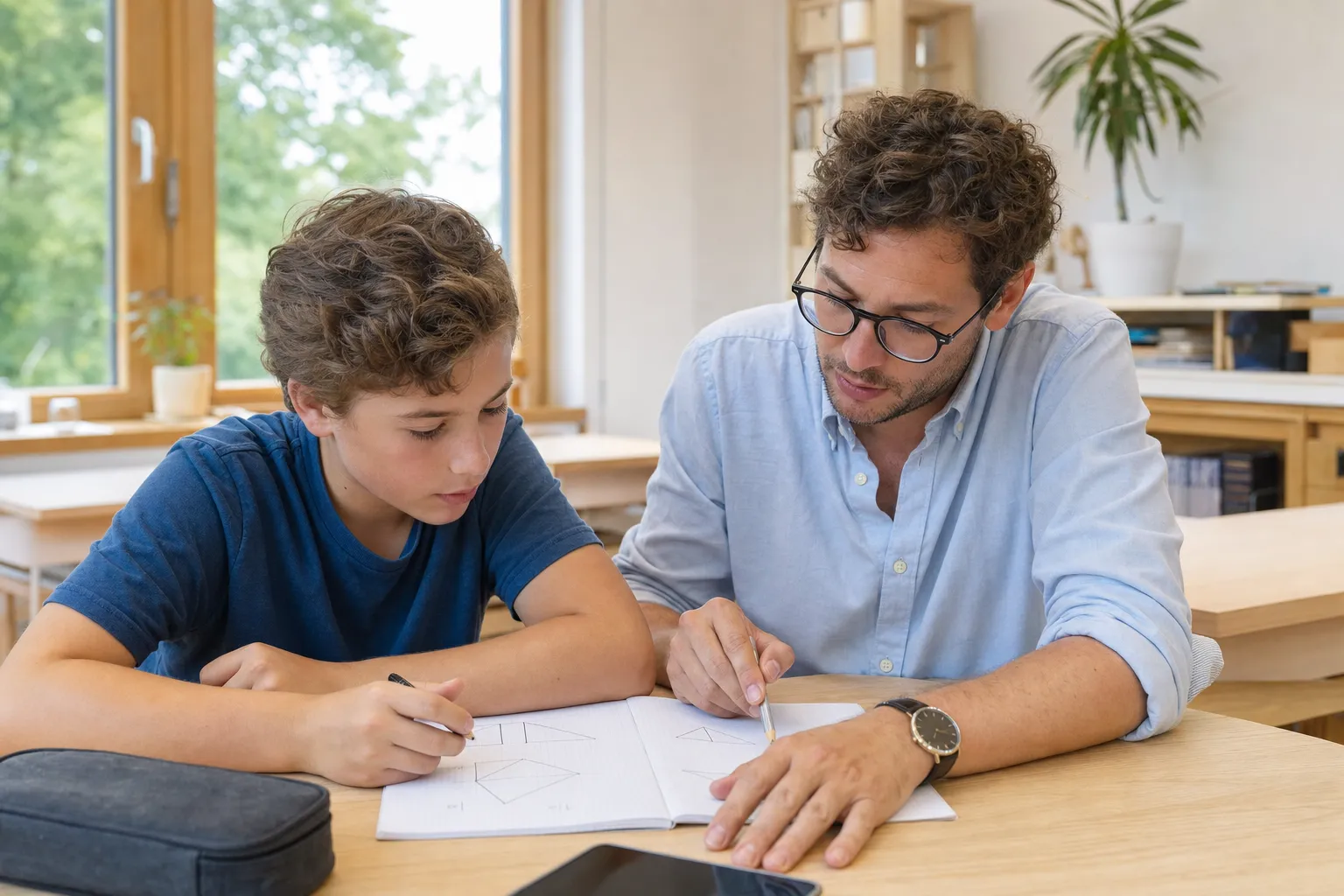
Maths, German and study support by appointment in afternoons or at weekends. Occasional sessions and optional four-hour monthly wallets are available.
A clear path from understanding to independent action
What this subject means
Homework support helps learners understand the work they bring and develop manageable study habits.
Why it matters as AI advances
Getting an answer from AI does not necessarily help a child learn the method. Guided questioning encourages the learner to explain and attempt the next task independently.
A learning path that builds independence
Understand the instruction → attempt a strategy → check the result → plan what to practise next.
Reading, painting, poetry and chess, Sundays 14:00–17:00. Included with another active paid program, subject to registration and capacity; standalone annual membership is also available.
A clear path from understanding to independent action
What this subject means
Sunday Club brings reading, painting, poetry and chess together in a welcoming community setting.
Why it matters as AI advances
Sustained attention, imagination, turn-taking and conversation help young people participate thoughtfully in both digital and shared physical spaces.
A learning path that builds independence
Explore a book, image, poem or position → try an idea → share or play with others → discuss a choice.
Eight seasonal activities of 90 minutes for ages 4–14: singing, painting, writing and performance, with a personal creation to share. Dates are confirmed separately.
A clear path from understanding to independent action
What this subject means
Gifts from the Heart connects creative activity with the act of making something meaningful for another person.
Why it matters as AI advances
When digital content is easy to generate, personal intention, care and the ability to create and share thoughtfully remain valuable.
A learning path that builds independence
Choose a recipient or theme → explore words, sound or materials → make and refine a personal creation → share its meaning.
Practical online language learning for adults, adapted to the agreed language, level and communication goals. Languages, schedule and fees are confirmed by enquiry.
A clear path from understanding to independent action
What this subject means
Adult language learning develops practical communication for conversation, work and participation in another linguistic setting.
Why it matters as AI advances
AI translation can assist preparation, but direct language knowledge helps adults judge tone, negotiate meaning and build trust in real interactions.
A learning path that builds independence
Agree a communication goal → practise useful language in context → take part in a conversation or presentation → review clarity and adapt.
Practical conversations and workshops that help families discuss AI, online safety, screen routines and changing learning needs. Formats, dates and fees are confirmed separately.
A clear path from understanding to independent action
What this subject means
Family learning helps adults understand the technologies and habits shaping a child’s daily life.
Why it matters as AI advances
As AI becomes more capable, families need shared language for trust, privacy, verification and responsibility, without requiring parents to become technical specialists.
A learning path that builds independence
Identify a family question → examine practical examples → agree a manageable routine → review what works and adjust.
Brain Boost Camp is a full-day school-holiday program combining practical digital learning, creativity and shared activities.
Why it matters as AI advances
Digital safety depends on habits and judgment as well as technical knowledge. Camp offers time to investigate everyday choices and discuss how technology affects people.
A learning path that builds independence
Explore a real-world question → practise with age-appropriate challenges → collaborate on an activity → explain what to use, check or change in daily life.
Every school holiday break. A full day of discovery.
Holiday camps run separately from weekly courses throughout the September 2026–July 2027 program year. Five-day camps run 08:45–16:45; lunch and working materials are included. Group A: ages 8–12. Group B: ages 13–17. Groups of 10. Each camp week ends with a Friday showcase for families. Dates and available places are confirmed before booking.
Find the right starting point
Tell us the learner’s age, interests and the support you are looking for. We confirm placement, dates, final fees and enrolment terms before any commitment.

 Meet the educator · Edwin Lantelme